7 Scary Conspiracy Ideas About The Bermuda Triangle🌊🌊


Fourteen men were in five torpedo tubes. 31 passengers were on the commercial flight. The US Navy ship was carrying 306 men. All involved in the so-called “Bermuda Triangle” the South Atlantic area bordered by Miami, Florida; San Juan, Puerto Rico; and the island of Bermuda.
The first mention of the Bermuda Triangle, sometimes referred to as the Devil’s Triangle, dates back to 1964, when a writer named Vincent Gaddis documented the many disasters that had occurred there since the late 1800s in a pulp magazine called Argosy. . Ten years later, enthusiast Charles Berlitz published a best-selling book about it, called The Bermuda Triangle, which has sold more than 14 million copies.
Since then, the Bermuda Triangle has become a permanent fixture in our imagination, becoming synonymous with mystery and crime and tragedy. Today, there are more Bermuda Triangle conspiracy theories than ships in the ocean; here are seven of the best.

Atlantis
Plato created the myth of Atlantis. So why is it still popular over 2,000 years later? If the writings of the Greek philosopher Plato had not been so truthful about the human condition, his name would have been forgotten hundreds of years ago.
But one of his most famous stories — the destruction of the ancient civilization of Atlantis — is almost true. So why is this story repeating itself more than 2,300 years after Plato’s death?
James Romm, a professor of classics at Bard College in Annandale, New York, says: “It’s the story that creates this idea. “It’s a great legend. There’s a lot people want to know about it.”
Plato told the story of Atlantis around 360 BC. The founders of Atlantis, he says, were half God and half human. They created a utopian civilization and became a great navy. Their habitat is a group of islands that are separated by different landmasses and connected by a canal. The beautiful islands contain gold, silver and other precious metals and are home to many rare and exotic animals.
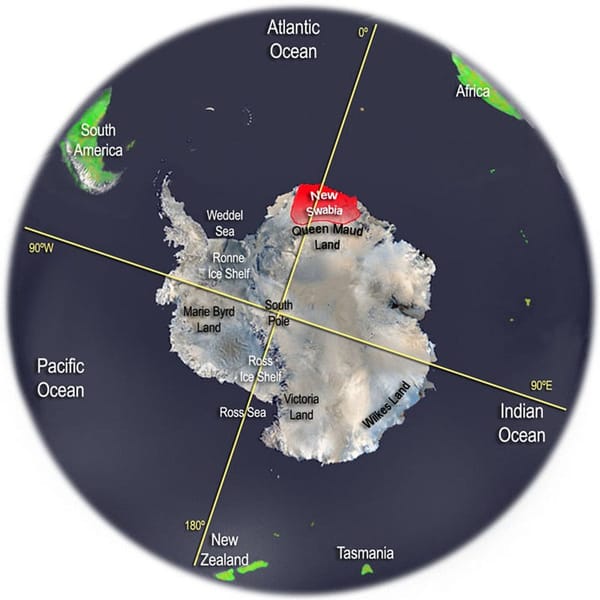
There is a large capital city on the central island. There are many theories about the location of Atlantis — in the Mediterranean, along the coast of Spain, even under what is now Antarctica. “Pick a spot on the map, and somebody says Atlantis is there,” says Charles Orser, curator of history at the New York State Museum in Albany. \”Anywhere you can imagine.\”
Plato said that Atlantis was about 9,000 years before his time and its history came from poets, priests and others. But Plato’s writings on Atlantis are the only known evidence of its existence. Perhaps based on a real event?
Few, if any, scientists believe that Atlantis actually existed. Ocean explorer Robert Ballard, National Geographic Explorer-in-Residence who discovered the wreck of the Titanic in 1985, says that “no one who won a Nobel Prize” said anything Plato wrote about Atlantis was correct.
Still, Ballard says, the story of Atlantis makes “reasonable sense” since many floods and volcanic eruptions have occurred throughout history, including events that have some similarities to the story of the destruction of Atlantis. About 3,600 years ago, a huge volcanic eruption destroyed the island of Santorini in the Aegean Sea near Greece. At that time, the Minoan high society lived in Santorini. The Minoan civilization came to an abrupt end during a volcanic eruption.
But Ballard does not think that Santorini is Atlantis, because the time of the eruption on the island does not coincide with when Plato said that Atlantis was destroyed. Romm believes that Plato created the story of Atlantis to illustrate some of his philosophical ideas.
He says, “He made a lot of words, the themes that run all his work.” “His ideas about the nature of God and the nature of humanity, the ideal society, the continuous corruption of society — all these ideas pass through many of his works. Atlantis is a different vessel to address some of the most important themes like it.”
The story of Atlantis is a story about morals and ghosts living in a very utopian civilization. But they became greedy, petty and “morally corrupt”, and the gods were angry because people had gone astray and started to pursue immorality,’ says Orser.
As punishment, he says, the gods sent “a terrible night of fire and earthquake” that sank Atlantis into the ocean.It was Charles Berlitz himself who proposed the idea that the lost city of Atlantis was somehow responsible for the shipwrecks and plane crashes in the Bermuda Triangle.
Since then, others have converged on this theory, arguing that the technology developed by the Atlanteans — including the power crystal — is still at work on the surface of the ocean, causing malfunctions in existing ships and aircraft. above. The biggest flaw in this theory, of course, is that Atlantis does not exist.
A breeding ground for rogue waves or a well of human error?
It is said that the Bermuda Triangle, which is deep between Bermuda, Puerto Rico and the tip of Florida, has for many years swallowed a group of ships, planes and people who did not expect it. Many stories of people disappearing have been reported.
People are arrested by foreigners for investigation. Geomagnetic storms are complicated by the system of pilots. The lost continent of Atlantis has been shaped by a mysterious and unknown force. Even better, the powerful vortexes immediately pushed the victims into another dimension.
But scientists over the years have pointed out that there is a valid explanation for the disappearances, and the danger in traveling through the Bermuda Triangle is no different than other places in the ocean. A new life has been made in one of these ideas: that the ships can be easily overcome by unexpected big waves.
This idea is not new, but a group of British scientists recently discussed the evidence for waves and other theories (including the role of human error) in a three-part documentary series “The Bermuda Triangle Enigma” , produced by the BBC for Channel 5. . “There is no doubt that this area is prone to rogue waves,” Simon Boxall, an oceanographer at the University of Southampton and one of the team’s scientists, told Live Science. They are possible “wherever many storms gather.”
According to the National Oceanic and Atmospheric Administration, rogue waves are higher and longer, like “walls of water,” and they often hit suddenly. The tip of South Africa, for example, is very exposed, where waves from storms in the South Atlantic Ocean, Indian Ocean and Southern Ocean meet at the same time, Boxall said. In fact, there has been a shortage of large ships and boats leaving South Africa over the years, he said. This also goes for the Bermuda Triangle, where storms can come from all directions, such as Mexico, the equator, and further east in the Atlantic.
Although each wave can reach more than 30 feet (10 meters) in height, sometimes they can fall at the right time and create a rogue, or “freak” that can reach over 100 feet (30 m) in height. Engineers from the University of Southampton in England have built model ships, including one of the USS Cyclops, a ship that ran aground in the Bermuda Triangle in 1918 with more than 300 people on board.
They simulated rogue waves in a wave tank and found that ships can sink quickly if hit. The bigger the boat, the harder it is for them to stay afloat, they discovered. Smaller boats can overturn them, but sometimes they can ride a wave if they hit it from the bow, Boxall said. But the great ship — designed to be supported at the front by the top of one wave and at the back by the top of the other — broke in two.
People often talk about the different magnetic fields above the Bermuda Triangle, Boxall said. He said, “None of it.” There are magnetic anomalies around the world related to changes in the Earth’s mantle below the Earth’s crust, but the closest one is about 1,000 kilometers to the south, on the coast of Brazil, far from Bermuda. Triangle, he said. Another theory is about explosive methane gas bags that can, due to some turbulence, float on the water and make the water less than the ship, causing the ship to sink. However, no experiments have been able to prove that this is possible, Boxall said. About one-third of all registered and private boats in the United States are in the states and islands of the Bermuda Triangle, he said. And according to the latest 2016 statistics from the Coast Guard, 82% of the incidents in this area that year involved people who have no training or experience at sea, he added.
“So you take one-third of all the sailors in the United States, throw them into the Bermuda Triangle,” and what you get is an empty nest, Boxall said. You don’t need any licenses or specific equipment like a radio or navigation chart to take a boat out to sea, he added. “Many times, working at sea, we have seen people navigating and using road maps, relying on their phones as a means of communication, finding out … you have to go 30 kilometers from the coast [and] you stopped the signal,”You can expand the Bermuda Triangle to a larger area … what you’ll see is that the Bermuda Triangle expands around the world,” Boxall said. “Rogue waves can hit in many different places, methane bubbles can hit in many different places, and everywhere you can get a high level of amateurs without any experience, you’ll get a lot of confusion that the mystery is disappearing.”
And, you know, maybe it’s the aliens who catch humans unawares and use wormholes to lead into their labs that they set up in the lost city of Atlantis.
Scientists say that magnetic force causes compass malfunctions
THE Bermuda Triangle is a magnetic force that makes compasses ineffective, research has found.
Deep seas will cause the compass to point to “true north” rather than magnetic north. Scientists believe that this explains the failure of many ships and airplanes. Christopher Columbus even wrote about compass movements in the area, National Geographic reported. The equatorial pole is constantly moving and is 1,200 km south of the static geographic pole.
Astronomer Edmund Halley said that the line of pain slowly moved westward, causing the magnetic field to collapse. Natural Resources Canada explained, “On most of the Earth’s surface, the compass needle points roughly towards the mountains.
Although the true north is the fixed point where the line of longitude converges on the map, the magnetic north is always moving; it is a place on the earth’s surface where its magnetic field points straight down. The difference between these two is called “decreasing” and all sailors and pilots know how to take this into consideration when plotting their course.
Aliens
No surprise here: where there are conspiracists, there are often UFOs. In this case, the story goes that visitors use the Bermuda Triangle as our gateway. There, they bring together the people and technology they need to do their research on our species. This doctrine explains the cause of many areas on the flights that match Bermuda Tirs is not recovering.
Methane Bubbles
In 2016, one researchers from the Arcty of Norway of Norway of Norway expressed that they have found a big population in half millions with the sea of Norway. They suspect that the craters were caused by a sudden explosion of underwater methane.
Many conspiracy theorists have joined the theory, arguing that this could be the cause of the shipwrecks in the Bermuda Triangle. However, a few months later, the researchers themselves burst the bubble, so to speak. “We have no connection to the Bermuda Triangle,” they said in a 2016 statement from the Center for Arctic Gas Hydrate, Environment, and Climate, a consortium of scientists who study the Arctic ocean. . wormholes
Could the Bermuda Triangle be the gateway to another space and another time? A pilot named Bruce Gernon said so. “I didn’t believe in time travel or teleportation until it happened to me,” Gernon says. The pilot alleged that “clouds surrounded my work and I flew 100 kilometers ahead”. Don’t you believe it? Fortunately, Gernon “documented what happened and memorized all the details of the flight,” publishing a book about his experience in 2017.
A place of water
According to NASA, a hydrothermal vent is a column of warm air that forms over hot water. Like ocean storms, the currents can exhibit wind speeds of up to 125 kilometers per hour. Because the Atlantic Ocean in Florida is one of the most active areas in the world for this extreme weather, some have speculated that it may be responsible for the Bermuda Triangle disaster. Although unproven, this theory is perhaps the closest to the truth, as both the United States Coast Guard and the National Oceanic and Atmospheric Administration have said any accidents in the area were likely caused by bad weather. and inexperienced navigators.
Why Scientists and Historians Reject Atlantis and Bermuda Triangle
Do stories of lost cities and vanishing ships still pull you in? They’ve gripped imaginations for centuries, and that pull hasn’t faded.
Atlantis is often framed as a sunken advanced society. The Bermuda Triangle is said to be a patch of ocean where ships and planes disappear. These claims are exciting, but scientists and historians reject them because there’s no credible evidence, only misunderstood sources, coincidences, and hype.
In this post, we’ll track where each myth began, why proof never shows up, and which simple, testable ideas fit the facts. Expect clear origins, solid records, and plain explanations like navigation errors, severe weather, and geology. The appetite for mystery remains strong in 2025, but careful methods still point to ordinary causes.
The Legend of Atlantis: From Ancient Tale to Modern Myth
Atlantis did not start as a lost continent claim. It began as a story Plato wrote around 360 BCE, then grew into a modern myth through later retellings. Scientists and historians reject it, not because they dislike mystery, but because the evidence does not support a real place. Think of it like Aesop’s fables. The lesson matters, not the literal plot.
Plato’s Account and Its True Purpose
Plato introduces Atlantis in two dialogues, Timaeus and Critias. He describes a powerful island empire beyond the Pillars of Heracles, which likely means the Strait of Gibraltar. The Atlanteans grow arrogant, then the gods defeat them and the island sinks. It reads like a moral stage set, not a field report.
- Philosophical aim: Plato builds a contrast between a virtuous Athens and a corrupt superpower. Atlantis serves his theme of civic virtue and hubris. He writes a teaching story that frames ethics, politics, and the ideal state.
- Source claim: Plato says the tale came through Solon, who heard it from Egyptian priests. That chain is unverified. No Egyptian texts from the period mention Atlantis, and no Greek records outside Plato confirm it.
- Historical mismatch: The dialogues do not align with known Bronze Age events, timelines, or geography. When Plato gives dates like 9,000 years before Solon, it clashes with what we know of Aegean and Mediterranean history.
Classicists read Atlantis as allegory. Plato often used invented cities to explore ideas. Like the city in The Republic, Atlantis teaches a lesson about power, pride, and collapse.
Why No Evidence Supports a Real Atlantis
If a high civilization sank in the Atlantic, we would expect debris, ruins, or artifacts. After a century of claims and many searches, nothing checks out.
Here is what the record shows.
- No underwater ruins: Maritime archaeologists use sonar, multibeam mapping, and ROVs. They find shipwrecks, ports, and submerged settlements in the Mediterranean and Black Sea. They do not find a sprawling city where the Atlantic claims place it.
- Plate tectonics: Continents move slowly, and ocean crust is dense and stable on human timescales. An island of continental size does not drop into the deep Atlantic in a sudden event. Geology shows no missing continent in that basin.
- Santorini does not fit: Some point to the Minoan eruption at Santorini, around 1600 BCE. Carbon dating and tephra studies anchor that date. It is an impressive Bronze Age disaster, but it does not match Plato’s timeline, location, or details.
- Failed expeditions matter: From Ignatius Donnelly’s 19th century maps to TV-led hunts in the 2000s, proposed sites keep shifting. When claims face surveys and digs, they collapse. Repeated negative results are evidence, because strong claims should yield consistent, testable finds.
Pseudoscience adds flourishes like crystal power, energy grids, or alien tech. These ideas collapse under simple checks.
- No artifacts with unknown alloys or nonhuman manufacture.
- No peer-reviewed studies that survive replication.
- No context layers in sediments that contain a lost high-tech culture.
Scientists do not reject Atlantis out of habit. They reject it because the data do not match the story. Plato’s narrative works as a warning about pride and excess. It does not work as a map to a sunken superpower.
The Bermuda Triangle Enigma: Ships, Planes, and Vanished Crews
The Bermuda Triangle refers to the Atlantic region bounded by Florida, Bermuda, and Puerto Rico. Writer Vincent Gaddis popularized the term in 1964, tying together scattered reports of missing ships and planes. The area sees heavy traffic. It is a busy crossroads for trade, tourism, and military flights, so incidents stand out and travel fast in news and books.
The fame of cases like Flight 19 in 1945 and the USS Cyclops in 1918 helped cement the legend. Yet records show no unique pattern of loss. Disappearance rates match what you would expect for a large, storm-prone corridor. Insurance underwriters and the U.S. Coast Guard report no special hazard, no supernatural forces, and no need for special premiums.
Famous Disappearances That Fueled the Mystery
A few cases get cited in almost every Triangle story. They deserve clear summaries, since many books inflate details or skip context.
- Flight 19, 1945: Five U.S. Navy TBM Avenger bombers vanished on a training mission. Radio logs show the leader’s compass readings disagreed, the weather worsened, and navigation drifted. Fuel ran low. A PBM Mariner sent to search also disappeared, likely after a fuel vapor explosion recorded by a nearby ship. Bad weather, disorientation, and limited instruments explain the tragedy.
- USS Cyclops, 1918: The Navy collier left Barbados for Baltimore with manganese ore, then vanished with 309 aboard. There was no distress call. Logs and tribunal notes point to heavy cargo, a known engine issue, and rough seas. A structural failure or capsizing is the simplest fit. No enemy action or mystery force is required.
- Mary Celeste, 1872: Found adrift near the Azores, far outside the Triangle, but often linked to it. The crew was gone, cargo intact, and the ship seaworthy. Possible causes include a rushed abandonment after a false explosion scare from alcohol vapors. Later retellings added eerie details that official records do not support.
- Ellen Austin, 1881: The tale says a derelict was found, a prize crew boarded, and the ship vanished, then reappeared empty, then vanished again. Researchers find no solid primary sources for the dramatic version. It reads like a sailor’s yarn that newspapers amplified.
Exaggerations sell books. Weather, routes, and maintenance records cut the mystery down to size.
Scientific Explanations for the Triangle’s ‘Curses’
The ocean around the Triangle is dynamic and often hostile. Natural forces and human limits explain how vessels can get into trouble and why debris can be scarce.
- Gulf Stream: This fast current can sweep floating wreckage far from a loss point. Search zones grow quickly. Recovery odds drop, which keeps stories open-ended.
- Microbursts and “air bombs”: Strong downdrafts over water can create sudden, violent winds. Satellite images sometimes show hexagonal cloud patterns tied to turbulent cells. These blasts can flip small craft or confuse pilots already dealing with low visibility.
- Rogue waves and waterspouts: Steep, short-period waves and rotating columns of air and water are known hazards. A single rogue wave can swamp a low-freeboard ship or slam a bow off course.
- Methane seeps: Gas releases on some continental margins can reduce water density in localized spots. Large-scale ship sinkings from this cause remain unproven here, but the physics is sound on small scales.
- Magnetic variation: Compass variation in the area is mapped. Navigational charts plot isogonic lines, so crews can correct headings. Compasses do not go wild. Errors tend to come from poor corrections, stress, or failing instruments.
- Human error: Fatigue, training gaps, and pressure to meet schedules lead to bad calls. In squalls or at night, a small mistake grows fast.
Research backs this picture. Larry Kusche’s work reviewed original logs, weather data, and schedules, and found many Triangle stories were misreported, moved on maps, or stripped of storm details. Modern navigation makes a difference. GPS, AIS, better radios, EPIRBs, and precise forecasts reduce risks and improve search success.
The bottom line matches official reviews. The Triangle is a large, busy, stormy region. It is not a special vortex. When you correct for traffic volume, weather, and currents, the statistics look normal and the mysteries shrink.
Why Do These Myths Persist Despite Expert Dismissal?
Atlantis and the Bermuda Triangle linger in public imagination because they satisfy deep human needs. They offer wonder, a tidy plot, and a cast of heroes and villains. Science asks for slow checks and patient records. Myths give quick meaning and a story you can share at dinner. That mix keeps the legends alive even when experts explain the facts.
The Psychology of a Good Mystery
We are wired to chase answers, even when data is thin. A strong story fills gaps and eases uncertainty.
- Curiosity: Unknowns feel like open loops that must close.
- Awe: Big, bold ideas feel better than mundane causes.
- Identity: Believing a secret tale can feel like joining a club.
A clean narrative often beats messy reality. A storm plus a navigation error sounds dull next to a vanished squadron.
Confirmation Bias and Pattern Seeking
Our brains hunt for patterns and support what we already think. That makes persistent myths hard to kill.
- Selective attention: People remember a dramatic incident, then forget routine safe crossings.
- Cherry-picked data: A few outliers get more weight than full statistics.
- Post hoc stories: Causes get stitched onto events after the fact.
Example: a ship sinks during rough weather in the Triangle, and the storm gets downplayed in retellings while the location is highlighted.
Sensational Media and Profit Motives
Mystery sells. Publishers, streamers, and social feeds reward the most clickable angle.
- Amplification: Each retelling adds a twist, then the twist becomes the headline.
- Visual hooks: Maps with glowing triangles, sonar pings, and dramatic stock footage suggest proof where none exists.
- Monetization: Ads, book sales, and ratings favor hype over nuance.
Quick edits can turn careful caveats into bold claims. A cautious “this could be” becomes a confident “this is.”
Culture Keeps the Stories Alive
Films, novels, and games keep Atlantis and the Triangle on stage. Fiction sets the vibe, then real events get framed to match.
- Aquaman and comics paint Atlantis as advanced and noble, which primes us to see any ruins as hints of a lost city.
- Adventure series place dramatic disappearances in the Triangle, even when actual cases sit far outside that boundary.
- Tourism and branding reuse the icons, which makes the myths feel familiar and true.
When culture repeats an image, your memory treats it like evidence.
Why Skepticism Builds Trust
Clear pushback from scientists is not about being a killjoy. It is about methods that protect us from fear and hype.
- Transparent standards: Claims need sources, dates, and data that others can check.
- Reproducible results: If a cause is real, independent teams can find it again.
- Error correction: Science updates models when new facts appear.
This process grows trust. It rewards honest doubt, admits mistakes, and replaces fear with understanding. That helps whether you read a thread on Atlantis or a headline about a missing boat.
Simple Habits to Check Claims
You do not need a lab to test a big story. These quick steps work for both topics.
- Ask for records: Logs, weather data, and charts matter. No records, no claim.
- Check scope: How often does this happen per miles traveled or flights flown?
- Watch the language: Words like “mysterious” can hide the lack of details.
- Trace the source: Follow quotes back to the earliest report. Look for edits.
- Compare experts: Coast Guard, insurers, and peer-reviewed studies are strong anchors.
Try this prompt when you read a bold claim: What would I expect to see if this were true, and do I see it?
Real Ocean Mysteries Worth Your Curiosity
Skepticism does not kill wonder. It guides it. The sea holds genuine puzzles that invite careful study.
- Deep-sea vents: Ecosystems thrive on chemical energy, not sunlight. New species keep showing up.
- Submarine canyons: Sediment flows reshape the seafloor faster than many expect.
- Bioluminescence: Light-making microbes and fish use signals we barely understand.
- Sound channels: The ocean carries low-frequency sound across long distances, with effects on whales and mapping.
These are testable, vivid, and full of discovery. Keep the wonder, drop the myths, and ask better questions next time Atlantis or the Triangle pops up in your feed.
Conclusion
Atlantis began as Plato’s teaching story, not a historical report, and no archaeology supports a real sunken empire. Losses in the Bermuda Triangle match heavy traffic, harsh weather, and human error, with statistics that look normal.
Scientists and historians reject both claims because the evidence is weak and better explanations fit the facts. Enjoy the myths as stories, then follow the records, maps, and peer-reviewed work for truth. Share your thoughts in the comments, or explore verified history and real ocean science next.