AI Unveils Babylonian Tablets: Warnings of Destruction Revealed

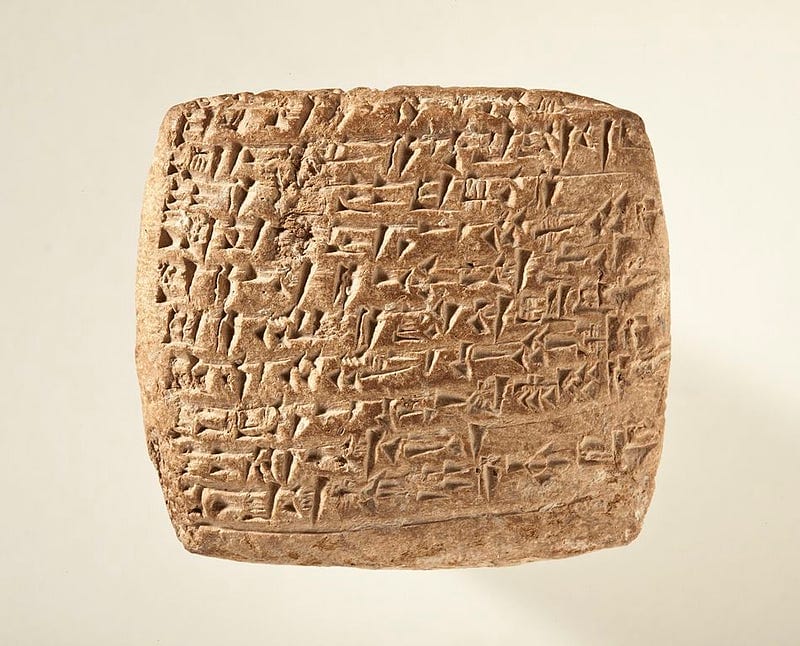
That’s exactly what’s happening with Babylonian tablets, and the revelations are both fascinating and alarming. These ancient relics, long a mystery to historians, are now being decoded by advanced AI technology. As we dive into these translations, a chilling message emerges: tales of destruction and chaos that might have been warnings for the future. What’s astonishing is how modern tools are giving voice to ancient warnings, raising questions about past civilizations' foresight. If you’re curious about what these findings mean for our present, you’re in the right place. This post will explore the groundbreaking role of AI in unlocking history and what these apocalyptic messages could mean for us all.
The Historical Context of Babylonian Tablets
The Babylonian tablets are more than just ancient artifacts; they are the voice of a civilization that thrived thousands of years ago. These clay tablets have captured the curiosity of historians and archaeologists alike, revealing a wealth of information about the ways of life, thoughts, and innovations of the people who once lived in the heart of Mesopotamia. Let's explore their origin, discovery, and immense cultural importance to truly appreciate their role in our understanding of ancient Babylon.
Origin and Discovery
The Babylonian tablets, crafted from clay and inscribed with cuneiform script, primarily date back to the Old Babylonian Period, roughly between 1900 and 1600 BCE. Many of these tablets were unearthed in archaeological sites across modern-day Iraq, home to the ancient city of Babylon. The process of excavation has been ongoing since the 19th century, spearheaded by scholars and institutions fascinated by this ancient civilization.
Prominent Discoveries: Several key discoveries have shaped our understanding of Babylonian life. For instance, the finding of the Si.427 tablet revealed Babylonian advancements in mathematics, notably in trigonometry, predating Greek contributions by millennia.
Key Sites: Excavations at sites like Nippur and Kish have revealed thousands of tablets, each offering unique insights into day-to-day activities, legal matters, and religious practices.
These discoveries continue to unravel the multilayered legacy of the Babylonians, showcasing their ingenuity and adaptability in a world that was rapidly evolving even back then.
Cultural Significance
The Babylonian tablets are not just historical records; they form a cultural tapestry that highlights the rich spiritual, administrative, and intellectual life of the time.
Religion and Mythology: Much of what we know about Babylonian beliefs comes from these tablets. They tell stories of gods and legends, such as those found on the Babylonian Flood Tablet, which parallels the biblical story of Noah's Ark. These narratives convey the complexity of Babylonian religion and how they perceived life’s mysteries.
Governance and Society: Tablets also reveal details about governance and societal structure. They contain laws, economic transactions, and correspondences that provide an understanding of how the Babylonian bureaucracy operated.
The tablets serve as a time machine, allowing us to peek into the daily lives and cosmic beliefs of one of history's most influential cultures. They are a testament to human curiosity and creativity, echoing through the ages with stories that still captivate our imagination today.
Artificial Intelligence in Deciphering Ancient Texts
Interpreting the hidden messages buried within ancient tablets is like borrowing an ear from the past. AI has become a beacon of hope in this pursuit, offering tools that go beyond the capabilities of traditional methods. Let's explore how artificial intelligence has transformed the way we decipher ancient scripts.
Machine Learning Algorithms
Machine learning algorithms serve as the backbone in deciphering codes of yesteryears. Specific algorithms, such as neural networks, can identify patterns and correlations that humans might miss. For instance, these algorithms can address the challenge of incomplete texts by predicting missing parts based on the context. The most commonly used algorithms in this context include supervised learning for labeled data and unsupervised learning for discovering hidden patterns.
However, there are some hurdles. One major challenge is the need for large datasets to train these models effectively, which can be a limitation when dealing with rare ancient texts. Moreover, machine learning applied to ancient languages sometimes struggles with unique script characteristics that are not found in modern languages.
Natural Language Processing
Natural Language Processing (NLP) is another marvel in AI's toolkit for understanding these timeworn texts. NLP techniques help uncover the semantics and context by breaking down the language into comprehensible chunks. They mimic how we, as humans, interpret languages, but at a much faster pace and with greater accuracy.
NLP tackles the structure of the text through syntax analysis and builds connections through lexical semantics. It enables AI to comprehend not just the words but the meaning behind them, which is crucial when interpreting historical texts written in languages that have long since faded from everyday use. More details on how NLP is employed in historical texts show how AI reconstructs contexts effectively.
Comparative Analysis with Other Deciphering Techniques
When it comes to comparing AI-driven methods with traditional linguistic techniques, AI certainly has an edge in speed and adaptability. Traditional methods depend heavily on the expertise and manual interpretation of linguists. While experts excel in understanding nuanced cultural and historical contexts, these factors can be somewhat static and time-consuming.
AI, on the other hand, can process volumes of texts in a fraction of the time, updating and improving its understanding as more data becomes available. Just as AI is reshaping language learning methods, it is similarly enhancing how we decode ancient languages. Yet, the human touch remains invaluable, especially when AI hits limits on cultural subtleties and unique historical contexts that it cannot yet fully grasp.
To put it simply, AI and traditional linguistics are like two hands clapping; they work best when they collaborate. The blend of AI's speed with human intuition could unlock secrets from tablets of old, revealing stories of destruction and perhaps, even hope.
Messages of Destruction in the Tablets
The deciphered Babylonian tablets unveil a tapestry of doom-laden narratives, rich with mythological, historical, and divine themes. These ancient texts, etched onto clay millennia ago, speak to a civilization grappling with cosmic forces beyond their control. By studying these warnings of destruction, we find reflections of their worldviews and beliefs.
Mythological Accounts of Catastrophes
The Babylonian tablets are steeped in mythological tales, often depicting catastrophic events of epic proportions. These narratives include cosmic occurrences like eclipses and natural disasters that were perceived as omens of catastrophic change. A classic example is the Epic of Gilgamesh, where natural calamities serve both as divine punishment and as catalysts for human transformation.
According to research, the Babylonians believed lunar eclipses foreshadowed the demise of kings. These celestial events were thought to be messages from the gods forewarning humans of impending doom.
Other tablets predict massive floods, aligning with stories like the Biblical flood, suggesting an ingrained cultural fear of water's destructive potential.
Historical Events Reflected
It's fascinating how these ancient writings mirror real-life historical turmoil. The texts often refer to the downfall of empires and the collapse of cities, resonating with the actual historical events chronicled by historians.
For instance, the destruction of Elam, a significant geopolitical entity in ancient Mesopotamia, is mentioned as an omen in the tablets. This parallels the actual decline of Elam, providing a historical anchor to these mythological narratives. You can find more about it here.
The narratives also reflect societal collapses, possibly aligning with times of famine or plague, inferred from textual interpretations.
Consequences of Divine Wrath
The writings also delve into themes of divine wrath, painting a vivid picture of gods who were not just creators but also forces of moral retribution.
Marduk, the chief deity, was often depicted punishing transgressions with plagues or disasters, underscoring a belief in divine justice.
These ancient texts read like moral parables, warning leaders and citizens alike of the consequences of disregarding divine laws. They suggest that arrogance or neglect could invite the wrath of the gods, leading to societal decay or collapse.
Such tales offer more than just historical intrigue; they provide insights into the human condition, highlighting our age-old fascination with interpreting the cosmos and our place within it. The messages encoded in these ancient clay tablets continue to resonate, echoing through the corridors of time with lessons still relevant today.
The Broader Implications of AI Deciphering
Artificial Intelligence (AI) is taking us on a fascinating journey, offering new ways to understand our past by deciphering ancient texts. These advancements not only shine a light on lost civilizations but also raise important questions about ethics. Let's explore the wider implications of AI's role in this age-old quest for knowledge.
Reviving Lost Knowledge
Imagine uncovering a treasure chest full of ancient wisdom that has been locked away for thousands of years. AI, with its incredible ability to analyze complex patterns, acts like a modern-day archaeologist, helping to revive lost knowledge from ancient civilizations. By doing so, AI provides insights that might have been forever lost.
Languages Brought Back to Life: AI algorithms can decipher ancient scripts, like those on Babylonian tablets, revealing secrets hidden in symbols and markings. These insights can lead to a better understanding of cultures and historical events that shaped our world. Learn more about how AI is cracking ancient languages.
Historical Context and Culture: By analyzing historical texts, AI helps reconstruct the societal norms, beliefs, and practices of ancient times. This can bring to life the stories and histories of civilizations that time almost forgot. The NVIDIA Technical Blog provides more examples of how AI deciphers texts and contributes to our understanding of history.
Ethical Considerations
While AI offers remarkable opportunities to uncover history, it also presents challenges that we must handle thoughtfully. The power to interpret ancient texts comes with the responsibility to do so ethically.
Representation and Misinterpretation: AI might misinterpret symbols or context, leading to skewed representations of ancient cultures. Ensuring accuracy and sensitivity in AI interpretations is crucial to respecting the legacies of those who once lived.
Cultural Sensitivity: There is a fine line between studying an ancient civilization and commercializing its heritage. It’s important that AI doesn’t reduce rich cultures to mere data points but rather adds to our understanding while maintaining respect for their uniqueness.
Bias in AI Models: AI systems may inherit biases from human-designed algorithms, affecting interpretations. It's essential to address these biases to prevent them from distorting our understanding of historical narratives. For more on the unexpected challenges, see AI Decoded Ancient Tablets.
As we continue to explore the potential of AI in deciphering ancient texts, it's vital to balance technological progress with ethical awareness. This approach not only enriches our knowledge but also honors the stories of those who came before us. The opportunity to connect with the past through AI’s lens is like opening a window into another time, full of lessons and insights yet to be discovered.
Future Prospects in AI and Archaeology
As technology advances at lightning speed, the combination of artificial intelligence (AI) and archaeology promises to unlock the mysteries of the past in ways once thought impossible. Consider modern archaeologists as detectives, but instead of magnifying glasses, they wield cutting-edge AI tools. From deciphering ancient tablets to reconstructing long-forgotten civilizations, the possibilities are endless. But what does the future hold for this exciting blend of history and technology?
Innovative Technologies on the Horizon
Emerging technologies are becoming crucial allies for archaeologists aiming to unravel the secrets of the ancient world. Imagine scanning entire archaeological sites without lifting a shovel. Sounds futuristic, right? Yet, advances in technology are making it a reality:
Drone Imaging: Drones paired with high-resolution cameras can capture aerial views of excavation sites with incredible accuracy. This technique helps archaeologists spot patterns and structures that aren't visible from the ground level. Check out Princeton's use of drone imaging.
Ground Penetrating Radar (GPR): This tool acts like a CT scan for the earth, helping researchers "see" beneath the surface without disturbing it. GPR is essential in mapping what lies below before any excavation begins. For more on this tech, read about how technology is changing archaeology.
LiDAR Laser Scanning: Similar to sonar, LiDAR uncovers detailed images of landscapes and structures hidden beneath dense vegetation, revealing ancient cities without needing to clear a single tree. Learn more about LiDAR's impact.
As these technologies evolve, the future of archaeology looks promising, offering a treasure trove of new discoveries.
Collaborative Efforts between AI and Historians
The union of AI and human expertise has birthed some of the most groundbreaking archaeological insights to date. So, how are AI and historians working together to paint a clearer picture of our past?
AI-Powered Analysis: By processing vast amounts of data, AI can identify patterns and make connections that might escape the human eye. This helps historians interpret ancient texts with greater accuracy. Discover unraveling history with AI.
Data Scientist-Archaeologist Partnerships: Teams comprising data scientists and archaeologists are working together to build AI systems tailored for historical research. These collaborations are revolutionizing how we study archaeological sites. Explore a recent AI-human collaboration.
Comprehensive Historical Insights: Combining digital technology and AI not only aids in discovering artifacts but also in contextualizing them within a broader historical framework. This synergy could unlock the doors to new historical interpretations. Learn about a holistic approach to historical research.
The partnership between AI and historians is just getting started, and the potential for further discoveries keeps the excitement alive in archaeological circles.
Conclusion
Artificial Intelligence has unlocked the secrets of Babylonian tablets, bringing their ancient warnings of destruction into the modern age. This powerful technology bridges past and present, reminding us of humanity's enduring struggles and resilience.
The insights derived from these tablets pose questions about society's readiness to heed historical lessons. Have we truly learned from the past, or are we repeating its mistakes? The urgency of understanding these messages cannot be overstated.
Explore how AI can shape our understanding of history. Consider its broader implications on today's world. Engage with this knowledge, and discuss what it means for our future. Thank you for joining us on this insightful journey—share your thoughts and insights below.