Horten Ho 229: The Flying Wing Invention That Changed the History of Aviation

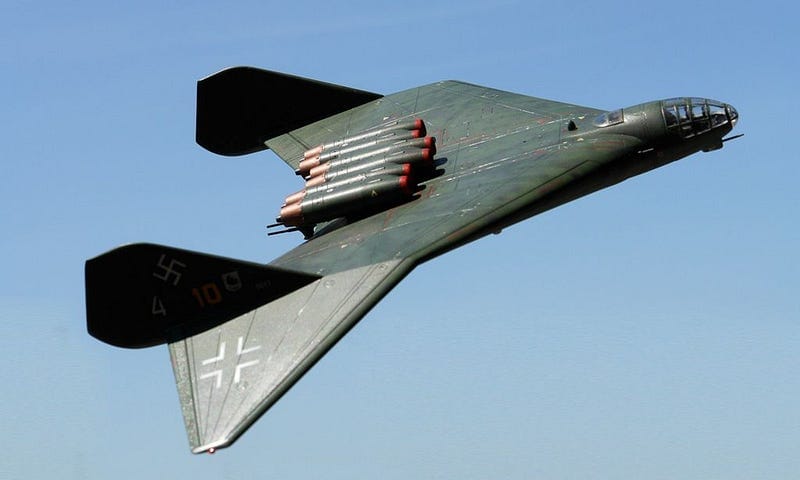
The rich tapestry of aviation history is woven with the powerful threads of innovation and technology, and few aircraft illustrate this better than the Horten Ho 229. Developed by the talented Horten brothers during World War II in Germany, this remarkable flying wing design marked a pivotal shift in aeronautical engineering and the history of aviation itself. Characterized by its trailblazing stealth capabilities and distinctive shape, the Ho 229 was a product of foresight and technical genius, destined to influence the course of modern aeronautics. This extraordinary aircraft not only pushed the boundaries of contemporary technology but also laid the groundwork for the future of stealth fighters and bombers, cementing its place in the annals of flight innovation.
History of Technology
The Horten Ho 229 revolutionized aviation technology, a testament to the groundbreaking spirit of the Horten brothers. Conceived during a period of intense military innovation, this flying wing aircraft sought to transcend conventional designs of the era. Unlike typical aircraft of its time, the Ho 229 featured a design focused on reducing its radar cross-section, making it harder for enemy forces to detect. This stealth capability was achieved through innovative construction techniques and materials, setting the stage for future developments in stealth technology. Although only prototypes were realized, the Ho 229’s influence resonated deeply within the engineering community, inspiring advancements that continued to shape the aerospace industry.
- Featured a radar-absorbent wooden structure to minimize detection.
- Influenced the design principles of modern stealth aircraft, including the B-2 Spirit.
- Demonstrated the use of driving technological evolution amidst wartime necessity.
- Pioneered the flying wing concept, eliminating the traditional tail section for better aerodynamics.
- Highlighted the potential of reducing weight and drag through strategic engineering choices.
The impact of the Horten Ho 229 reaches beyond its physical construction, embedding itself in the very fabric of aerospace innovation. By melding visionary design with cutting-edge materials, the Ho 229 forever altered the landscape of military aviation.
General Considerations
Taking a leap from traditional aircraft models, the Horten Ho 229 was engineered to be an aerodynamic marvel. The idea was simple yet revolutionary: a flying wing design to minimize drag and increase speed. Developed by the Horten brothers in wartime Germany, this approach marked a significant departure from conventional aircraft, leading to innovations that still reverberate today. Despite its limited production, the influence of the Ho 229 is evident in post-war aviation, inspiring future strategies and aircraft designs with its avant-garde concept.
Thanks to the jet engine design and the use of unique materials like carbon composites, the Ho 229 became a precursor to modern military aviation silhouettes. Its design tackled the aviation challenges of speed and visibility, promising an aircraft that could outpace its contemporaries while evading detection. Although the war ended before it could be mass-produced, its blueprints guided many post-war development projects, emphasizing its role as a catalyst in the evolution of military aviation technology.
- Early implementation of a jet propulsion system for increased performance.
- Utilized lightweight materials such as wood and carbon, paving the way for modern composite structures.
- Laid foundational principles for stealth technology, later seen in Cold War-era aircraft.
- Proved that novel aircraft configurations could enhance maneuverability and operational efficiency.
- Inspired designers to think beyond the constraints of traditional airplane construction.
The Horten Ho 229 was more than just an aircraft; it was a platform of technological trials that paved the path for later advancements in stealth and aerodynamics.
Social Involvement in Technological Advances
The tale of the Horten Ho 229 is incomplete without recognizing the societal backdrop that fueled its creation. Public interest and support played pivotal roles as society’s collective fascination with aviation and military prowess spurred technological progress. Amidst the urgency of wartime innovation, collaborative efforts from scientists, engineers, and an aviation-entranced public nurtured an environment ripe for transformational designs.