Moon was produced by a head-on collision between Earth and a forming planet

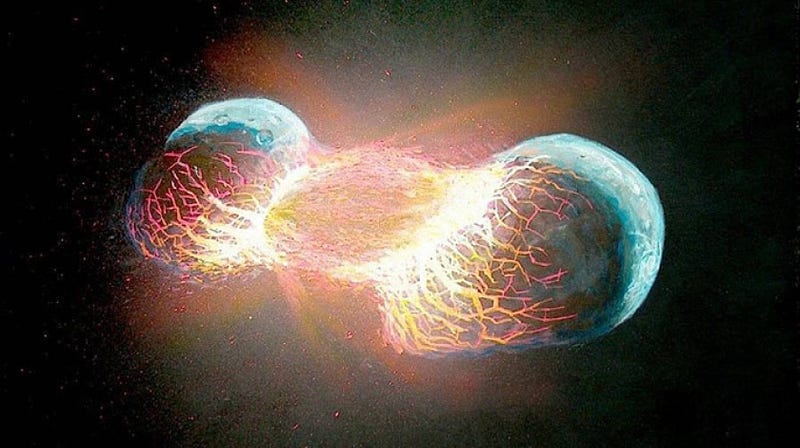
The planets were much closer together, and the Sun was surrounded by a disk of gas and dust. This disk was the birthplace of our planet Earth. But Earth didn’t form in isolation. It collided with another planet, Theia, which created the Moon.
This event changed the Earth forever and set in motion the events that would lead to the development of life on our planet. In this blog post, we will explore the Big Collision Theory and what happened when Earth and Planet Theia met. We will also discuss the implications of this event and how it has shaped our world today.
The Big Bang Theory: What We Know, What We Think We Know, And What’s Possible
The Big Bang Theory is the most widely accepted theory of the universe’s beginning. It states that the universe began in a hot, dense state and has been expanding ever since. The theory explains the observed redshift of galaxies as they move away from us and describes the cosmic microwave background radiation, which is uniform throughout the universe.
What we know:
The Big Bang Theory is supported by a large body of evidence, including measurements of the cosmic microwave background radiation, the redshift of galaxies, and the abundance of light elements.
What we think we know:
There are still some mysteries surrounding the Big Bang Theory, such as what caused the initial expansion and what happened to all of the antimatter that was created during the Big Bang.
Additionally, scientists are still working to determine exactly how old the universe is and what its ultimate fate will be.
What’s possible:
Some scientists have proposed alternative theories to explain the observations that led to the development of the Big Bang Theory. These theories include inflationary cosmology and cyclic models, but none have yet gained widespread acceptance. Additionally, new observations could lead to modifications or even replacements for the Big Bang Theory in the future.
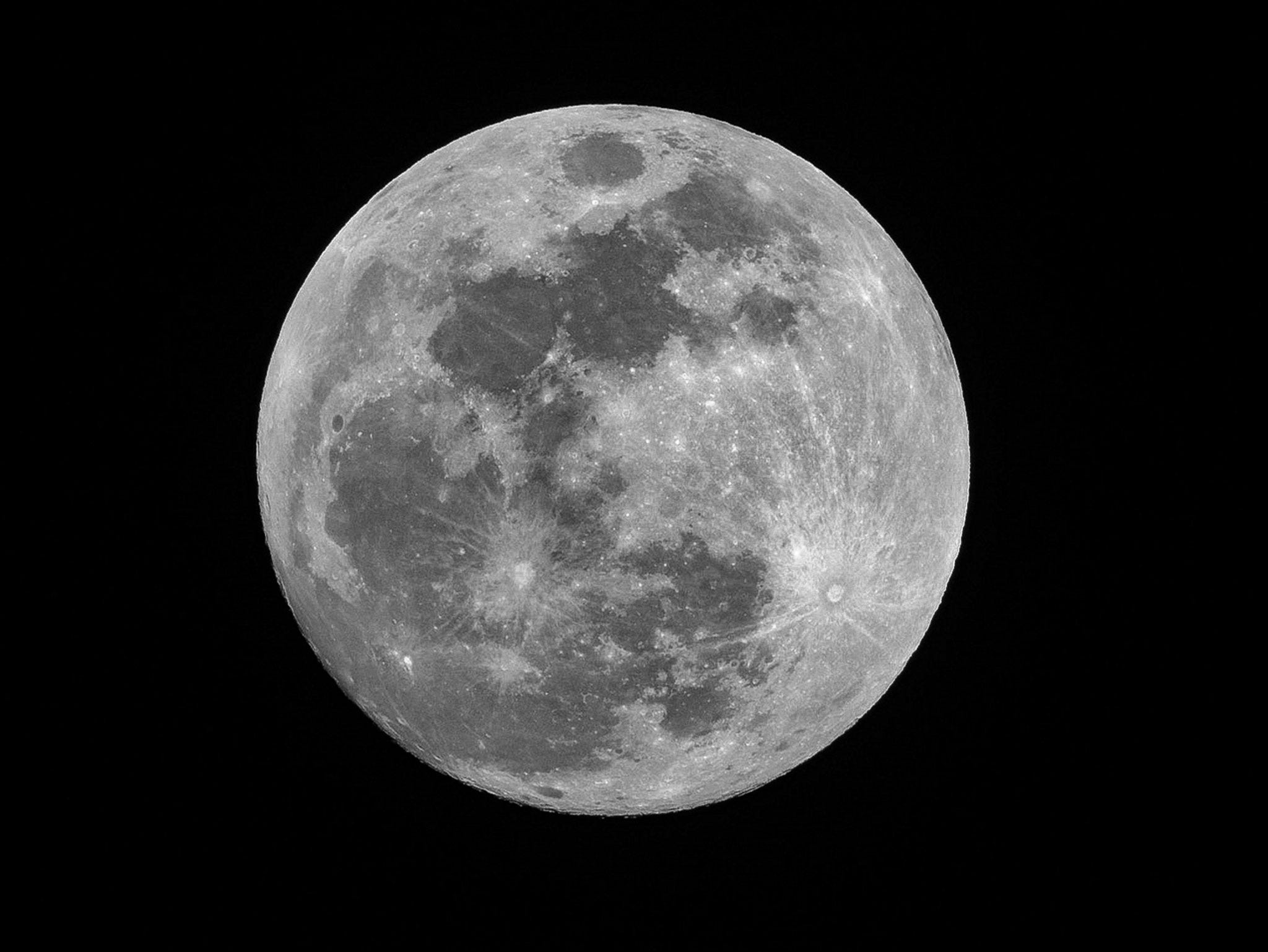
What Is The Origin Of The Moon? Is It A Satellite Or A Planet?
The Moon is thought to have formed after a giant impact between Earth and another body called Theia. The resulting debris from the impact formed a disk around Earth that eventually coalesced into the Moon. This theory is supported by evidence of similar compositions of Earth and the Moon, as well as the fact that the Moon’s orbit is tilted relative to Earth’s orbit. However, it is still not clear if Theia was a planet or a satellite of another planet.
The 9 Greatest Cataclysm’s In The Earth’s History
1. The first great cataclysm happened when the Earth and Planet Theia collided. This caused the Earth to spin on its axis and created the Moon.
2. The second great cataclysm happened when the supercontinent Pangea broke up. This led to the formation of the continents we know today and caused major changes in global climate patterns.
3. The third great cataclysm was the asteroid impact that created the Chicxulub crater. This had a devastating effect on the Earth’s ecology and caused a mass extinction of dinosaurs and other animals.
4. The fourth great cataclysm was the eruption of Mount Tambora. This was the largest volcanic eruption in human history and had a profound impact on global climate, causing ‘the year without a summer’.
5. The fifth great cataclysm was the Great Flood described in the Bible. This massive flood is thought to have occurred due to melting glaciers after the last ice age, resulting in rising sea levels and widespread devastation.
6. The sixth great cataclysm was an earthquake that struck Lisbon in 1755. This quake caused widespread damage and loss of life, as well as triggering a tsunami that struck coastal areas of Portugal and Spain.
7. The seventh great cataclysm was the Napoleonic Wars, which were fought between Napoleon’s French Empire and various European coalitions from 1803–1815. These wars resulted in millions of deaths and had far-reaching effects on social.
Introduction
The Big Collision Theory is the scientific explanation for how our moon was formed. It posits that, billions of years ago, a planet called Theia collided with Earth. The impact of the collision caused debris to be sent into orbit around Earth, which eventually coalesced to form the moon. The theory is supported by evidence from the Apollo missions, which found that the moon has a different chemical composition to Earth.
However, some scientists have disputed the theory, claiming that the differences could be explained by other factors. In this blog post, we will explore the evidence for and against the Big Collision Theory.
We will also look at what scientists believe happened when Earth and Theia collided, and how it could have created our moon.
What is the Big Collision Theory?
The Big Collision Theory is the scientific explanation for how our moon was formed. It states that approximately 4.5 billion years ago, a planet called Theia collided with Earth. This impact caused a large chunk of Theia to be ejected into space where it eventually cooled and formed into our moon.
This theory is supported by evidence of similar chemical composition between the Earth and moon, as well as the moon’s orbit around Earth. Additionally, computer simulations of this event show that it would explain the unique properties of our moon, such as its low density and lack of an iron core.
What are the Different Types of Collisions?
There are three main types of collisions that can occur between objects in space: direct hit, glancing blow, and oblique impact.
A direct hit is when two objects collide head-on. This is the most destructive type of collision, as it transfers all of the kinetic energy from one object to the other.
A glancing blow is when two objects collide at an angle. This type of collision is not as destructive as a direct hit, but can still cause significant damage.
An oblique impact is when two objects collide at an angle that is not perpendicular to the surface of either object. This type of collision can cause extensive damage to both objects involved.
How did Earth and Planet Theia Meet?
Most likely, Theia was a rogue planet, one that didn’t form in the same orbital plane as the other planets in our solar system. Instead, it probably formed in the Oort Cloud — a vast region of space at the outer edge of our solar system where comets and other small bodies orbit.
Theia would have been pulled into the inner solar system by the gravity of the gas giants — Jupiter, Saturn, Uranus, and Neptune. As it approached the sun, Theia would have been heated up by the sun’s radiation. This would have caused Theia to break apart into a debris field.
As Theia got closer to Earth, the two planets’ gravitational fields would have interacted with each other. This interaction would have caused Theia to shatter into pieces. Some of these pieces would have merged with Earth, while others would have gone into orbit around Earth to form the Moon.
What Happened When They Collided?
In Greek mythology, Theia was the Titan goddess of sight and by some accounts, of the golden light of dawn. She was also the mother of Helios (the Sun), Selene (the Moon), and Eos (the Dawn). Her name literally means “divine”, “of the gods”.
Theia was one of the children of Gaia (Earth) and Uranus (Sky or Heaven). She waged war against her siblings with her husband Cronus, and she was eventually banished to Tartarus.
Theia is best known for being the mother of two important astronomical objects: Helios, the sun god, and Selene, the moon goddess. But she was also said to be the mother of Eos, the goddess of dawn.
Some stories say that Theia was so beautiful that Zeus, king of the gods, fell in love with her and made her his mistress. This resulted in Theia having a son named Phaethon.
Other stories say that Theia shared a golden apple with Aphrodite which caused a feud between them. The conflict was eventually resolved by Paris, who awarded the apple to Aphrodite.
Conclusion
It’s amazing to think about the events that had to occur in order for our planet to exist. The Big Bang created the universe, and then billions of years later, a chance collision between two planets brought us the resources we needed to support life. Who knows what other incredible events are waiting to be discovered?