Operation Paperclip: How Nazi Scientists Boosted NASA’s Success

In the shadowy aftermath of World War II, a secret operation laid the groundwork for one of America’s most monumental achievements. Operation Paperclip, a covert initiative by the U.S. government, brought over 1,600 Nazi scientists to American soil. These scientists, once part of the Nazi war machine, were instrumental in igniting NASA’s rapid advancements during the space race.
Imagine the ethical dilemma: brilliant minds tainted by a dark past, now spearheading groundbreaking projects like the Apollo moon landing. Despite their controversial histories, figures like Wernher von Braun became key architects of space exploration. By assimilating this talent, the U.S. not only secured a strategic advantage over the Soviet Union but also propelled humanity into a new era of space discovery.
This introduction sets the stage for exploring how the controversial, yet pivotal, Operation Paperclip fueled NASA’s early successes, leading to historic achievements that still resonate today.
Understanding Operation Paperclip
Operation Paperclip was a top-secret program initiated by the United States after World War II. Its goal was to recruit former Nazi scientists to help advance American technological and scientific capabilities. This section explores the historical context and key figures involved in this controversial but impactful initiative.
Historical Context
The world was vastly different after World War II. The war had ended, but the race for technological supremacy had just begun. The United States and the Soviet Union were locked in a Cold War, each aiming to outdo the other in science and technology.
- Tension and Opportunity: The Allies had defeated Nazi Germany, but they also found themselves in a new kind of conflict — the Cold War. This struggle was not just about military might; it was about scientific and technological dominance.
- Strategic Initiative: Operation Paperclip emerged as a strategic plan to harness the knowledge of German scientists and engineers. The idea was to prevent this talent from falling into Soviet hands and use it to bolster America’s own technological capabilities.
During this time, it became clear that capturing German scientists could provide a significant edge. By recruiting these experts, the United States aimed to stand at the forefront of technological advancements.
Photo by Joao Aldeia
For more on the background of Operation Paperclip, you can check out this article from History.
Key Figures in Operation Paperclip
Several prominent scientists were recruited during Operation Paperclip. These individuals brought with them a wealth of knowledge and expertise, significantly contributing to American advancements in various fields.
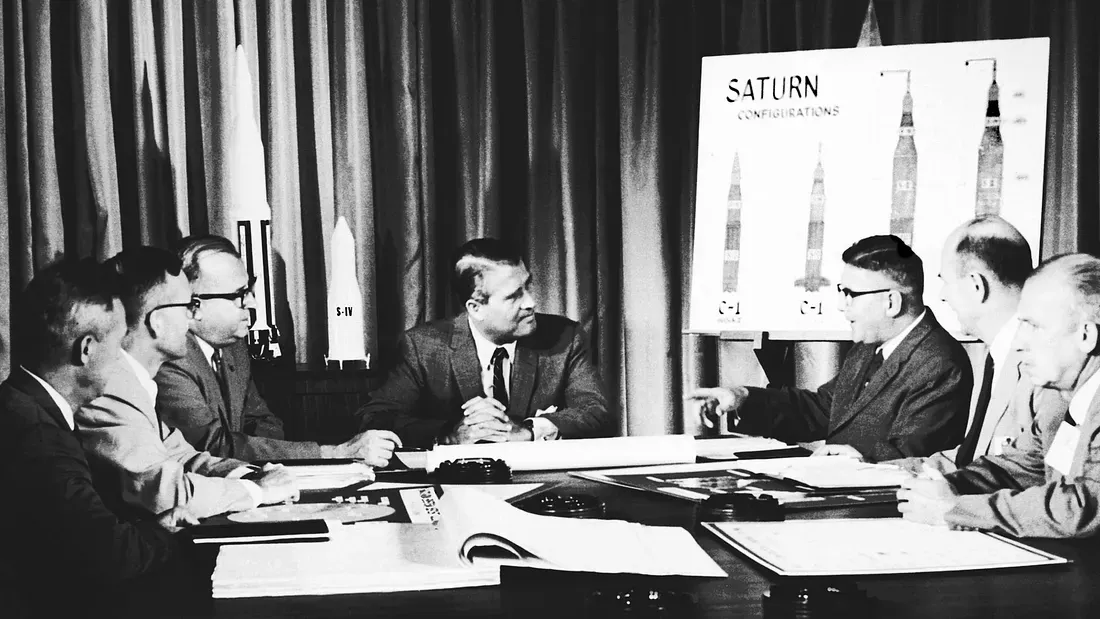
- Wernher von Braun: Perhaps the most famous of all, von Braun was a leading figure in rocket technology. He had been instrumental in developing the V-2 rocket for Nazi Germany. Under Operation Paperclip, von Braun and his team moved to the United States, where he played a crucial role in developing the rockets that would later power NASA missions, including the Saturn V that took Americans to the moon. Learn more about Wernher von Braun’s work with NASA.
- Kurt Debus: Debus was another notable recruit. He became the first director of NASA’s Kennedy Space Center, helping to launch America’s first space missions and paving the way for future explorations.
- Hubertus Strughold: Known as the “Father of Space Medicine,” Strughold’s research was fundamental in developing the life support systems for astronauts.
These scientists and many others transformed American science and technology, contributing to various fields from rocketry to medicine. Their work laid the foundation for many of the advancements that we now take for granted.
For a deeper dive into the lives and contributions of these scientists, check out this PBS article on Wernher von Braun.
Operation Paperclip played a pivotal role in shaping the technological landscape of the 20th century. By understanding the context and the key figures involved, we can appreciate how this secret initiative fueled some of the most significant achievements in American history.
The Integration of Nazi Scientists into NASA
The transition of Nazi scientists to NASA is a tale of wartime urgency and scientific ambition. Operation Paperclip was the controversial U.S. program that brought these scientists to America, a decision that would shape the future of space exploration.
Wernher von Braun’s Role
Photo by Pixabay
Wernher von Braun is often the most recognized name among the Nazi scientists who came to the United States. He started his career in Nazi Germany, where he was instrumental in developing the V-2 rocket, the world’s first long-range guided ballistic missile. Following World War II, von Braun and his team were brought to America under Operation Paperclip, a program designed to leverage their expertise by NASA.
Von Braun’s impact on NASA was immediate and profound. He transitioned seamlessly from developing wartime rockets to becoming the chief architect of the Saturn V rocket. His design was pivotal in carrying astronauts to the moon during the Apollo missions. As the head of NASA’s Marshall Space Flight Center, von Braun’s vision and leadership turned ambitious dreams into reality according to Britannica.
Technological Contributions
The technological advancements brought by former Nazi scientists were not limited to von Braun alone. These individuals played crucial roles in a variety of NASA’s most famous projects. The Saturn V rocket, a centerpiece of the Apollo program, stands as a testament to their contributions. This rocket was vital for sending humans to the moon, marking a significant achievement in human history as detailed by PBS.
Moreover, technologies developed during the V-2 rocket program were repurposed and evolved under NASA’s guidance. These technologies included guidance systems, propulsion methods, and materials science. These innovations were integral to multiple missions, from launching satellites to deep-space exploration.
- The Saturn V rocket: Built under von Braun’s leadership, it remains one of the most powerful rockets ever made.
- Guidance systems: Enhanced precision in controlling spacecraft trajectories.
- Propulsion methods: Improved fuel efficiency and power outputs, crucial for long-duration flights.
These advancements underscore how the integration of Nazi scientists into NASA’s fold was a complex but ultimately transformative decision. The legacy of these contributions continues to propel humanity towards new frontiers in space exploration.
Ethical Considerations and Controversies
Operation Paperclip was a secret U.S. initiative that brought Nazi scientists to America after World War II. While it significantly advanced the country’s scientific and technological capabilities, it also stirred a complex web of ethical questions and controversies. This section will explore the public perception of this operation and its impact on science and ethics.
Public Perception
When Operation Paperclip became public, many Americans were shocked and outraged. The idea of bringing former Nazis to the U.S., even for scientific advancement, felt like a betrayal to those who had fought against the very regime these scientists supported.
Photo by Jozemara Friorili Lemes
American society was divided:
- Supporters saw it as a necessary evil to gain the upper hand in the Cold War.
- Critics argued it was morally wrong to overlook the war crimes these scientists might have committed.
Personal feelings were mixed, with some viewing the scientists as products of their times and others labeling them as irredeemable. This complexity was mirrored in the legacy left behind by these scientists, who helped build NASA and other institutions while their pasts remained a dark shadow over their achievements.
For further reading on how America grappled with Nazi sympathizers during this period, check out this analysis.
Impact on Science and Ethics
Operation Paperclip wasn’t just a historical event; it raised enduring questions about ethics in science and the potential for historical revisionism. By employing scientists involved with the Nazi regime, the U.S. ignored or downplayed their war crimes.
This decision had several profound impacts:
- Historical Revisionism: The operation led some to worry that history could be rewritten, downplaying the role these scientists had in the Nazi war machine.
- Ethical Dilemmas: It forced scientists, policymakers, and the public to confront uncomfortable questions about the price of scientific progress. Is it acceptable to use knowledge gained through unethical means?
This operation remains a point of contention in how we view the intersection of science and morality. For a deeper insight into the ethical controversies of Operation Paperclip, check this article.
The debate on ethics continues to this day, and it’s crucial to remember this chapter in history to ensure that scientific advancements do not come at the cost of our moral integrity.
Continue reading about the broader implications and the controversies surrounding Operation Paperclip for a full understanding of its impact. For more details, see this overview.
Stay tuned as we dive deeper into the legacy and technological advancements brought about by these controversial figures.
Legacy of Operation Paperclip
Operation Paperclip is an often-overlooked chapter of history that significantly influenced the course of American space exploration. The program brought over 1,500 German scientists to the United States after World War II. Their work shaped NASA’s future and left an indelible mark on both science and culture.
Continuing Influence on Space Exploration
Imagine trying to reach for the stars without the knowledge and expertise of those who had already been halfway there. That’s what Operation Paperclip achieved by bringing scientists such as Wernher von Braun to America. These individuals were pioneers in rocketry and missile technology. Their innovations laid the groundwork for many NASA missions that followed.
- Advanced Rocketry: Von Braun and his team were instrumental in developing the Saturn V rocket. This powerhouse was crucial for the Apollo missions, including the iconic moon landing in 1969. Learn more about Wernher von Braun’s contributions here.
- Navigation and Guidance Systems: The Germans had developed advanced guidance systems for their V-2 rockets. These technologies were essential for precise space navigation, steering spacecraft through the vast emptiness of space.
- Materials Science: Some of the materials and construction techniques they perfected were used to build more efficient, durable spacecraft.
These contributions didn’t stop at the moon. The methodologies and engineering principles introduced by these scientists continue to influence space missions today, from space shuttle programs to Mars rovers and beyond. Think of it as passing a baton in a relay race, with each generation building upon the previous one’s achievements.
Cultural Impact
Operation Paperclip’s legacy extends beyond technological advancements. It has also woven itself into the fabric of popular culture and historical discourse.
- Movies and TV Shows: Many films and television series have explored the moral and ethical questions raised by Operation Paperclip. These stories often delve into the complexities of using former enemy scientists for national gain. An example is the film “The Right Stuff,” which indirectly references the influence of German scientists on American space efforts.
- Books and Documentaries: Numerous works have been published to uncover the real stories behind these scientists. These narratives sometimes paint a troubling picture but also highlight the undeniable contributions to space exploration. This article from Time magazine discusses how Nazi science fed the Apollo moon landing, adding a complex layer to the historic achievement.
- Public Perception: The story of Operation Paperclip forces us to confront uncomfortable questions about morality versus necessity. While some view these scientists as heroes who helped America win the space race, others see them as war criminals who were given a free pass. A detailed discussion on the controversial aspects can be found here.
This duality makes Operation Paperclip a subject of ongoing fascination and debate, influencing both how we view space exploration and our understanding of historical accountability. The program’s legacy teaches us about the complicated interplay between ethics and progress.
Photo by Ann H
Understanding Operation Paperclip is like piecing together a complex puzzle. Each revelation adds depth but also raises new questions, making it a compelling story worth exploring.
Conclusion
Operation Paperclip was a controversial, yet pivotal chapter in American history. By acquiring Nazi scientists, the U.S. jumpstarted its space exploration efforts, leading to remarkable achievements like the Apollo moon landings. This strategic move had its moral complexities but cannot be denied in how it shaped NASA’s success.
Engage with the ethical questions this history raises. Consider the long-term impact technology can have when separated from its origins. Thank you for your time, and feel free to share your thoughts.